Change: Rowland spacing increased from 8632.48 to 8637.00
mm.
This will decrease photon wavelengths.
Software version:
CREATOR = 'tgextract - Version CIAO 2.0b' / tool that created
this output
REVISION=
2
ASCDSVER= 'R4CU5UPD8.1'
Data location:
colossus.harvard.edu:/dsops/repro/tap/sdp.full.R4CU5UPD8.1.20000815/cache/1999_09_25/acis/
wiwaxia.mit.edu:/nfs/wiwaxia/d3/ciao_tests/2.0alpha_000605/1318-AP/
Data files:
acisf00094N001_e1_pha2.fits
acisf00094N001_e1_evt2.fits
Procedure:
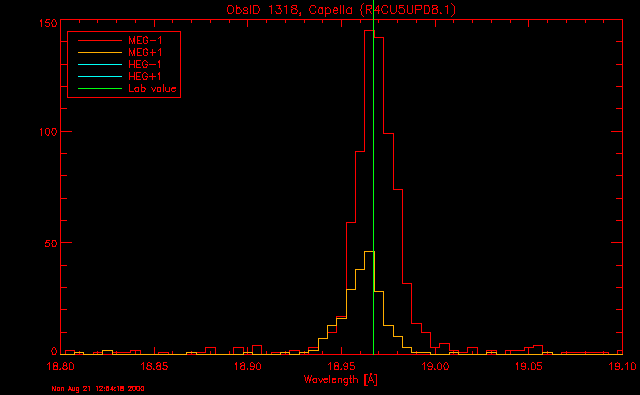
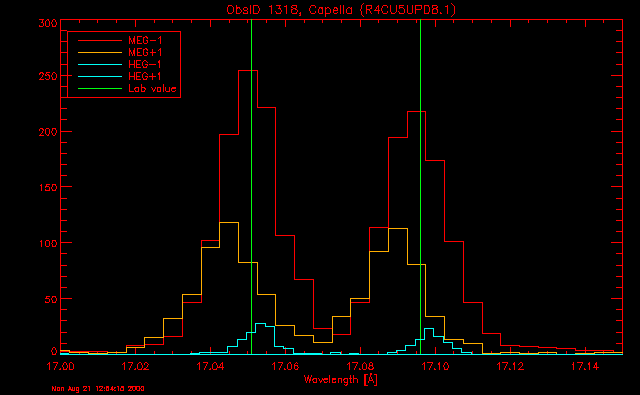
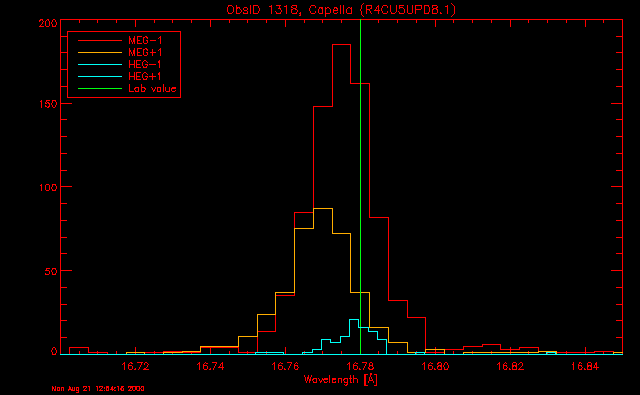
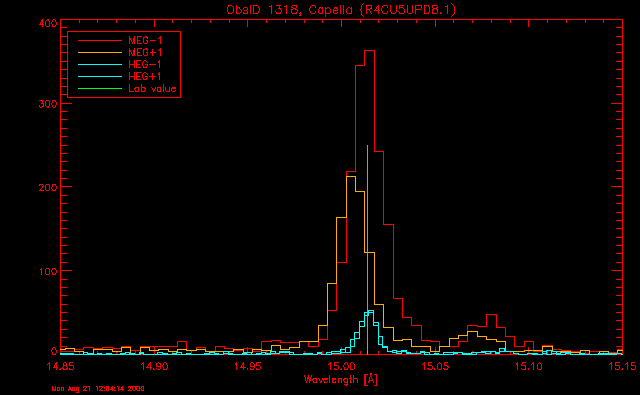
Plot +1 and -1 orders for MEG and HEG
from pha2 files, in regions of lines with well known wavelengths.
Overplot the expected position.
Examine zero-order location from tgdetect,
compare to 1st moment of zero-order region's x and y.
Summary:
The pixlib change works. The major residuals have been removed. Small systematics may be due to period uncertainties and zero-order centriod determination.
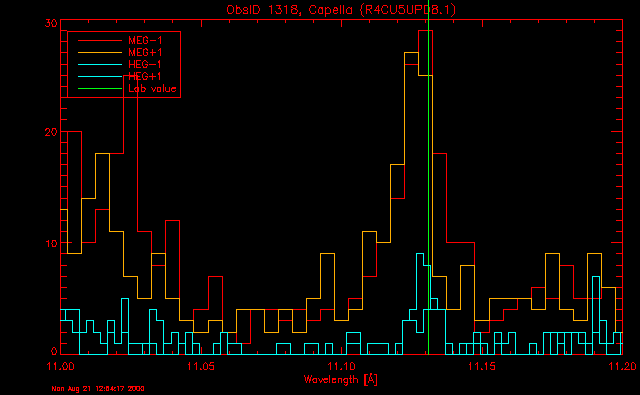
Iron line reference:
Brown et al 1998apj502:1015
(accuracy about 0.002A at 11A
== 181ppm == 54 km/s)
Line plots show MEG -1 (red), MEG+1 (orange), and if possible, HEG -1 and +1 in bluish. The vertical green line marks the expected line position. The best MEG or HEG wavelength would be the average of the +1 and -1 orders' wavelengths, since that will remove any zero-order centroid error.
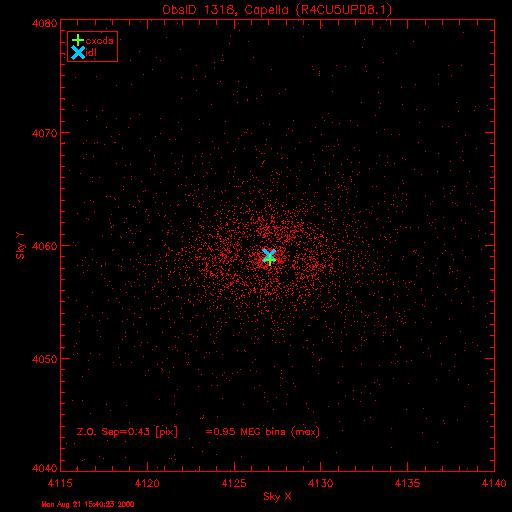
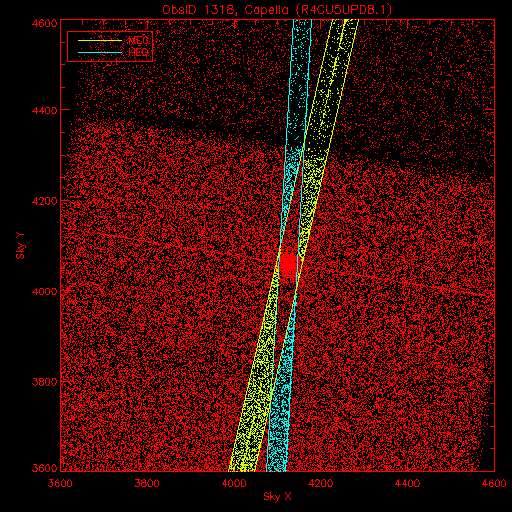
Zero order region. The left is a close-up, and the structure is due to pile-up. Both the pipeline (tgdetect) position (plus sign) and an independent determination (x) are shown. They are 0.43 sky pixels apart, which equates to at most (depending on offset direction) 0.95 MEG wavelength bins (of 0.005A each). The line offsets between plus and minus are consistent with this. The right hand plot is a wider-field view which shows the dispersion directions.
IDL source code is here.
2000.08.17 d.p.huenemoerder dph@space.mit.edu