I only recently became aware that acis_detect_afterglow is routinely
applied by the pipelines on grating data. Order-sorting is itself
very efficient at rejecting background events, so I decided to quantify
the effect on grating spectra. John Davis, in working on pileup models
for grating data noticed some peculiarities which he traced to events with
afterglow status bits set.
2) There are possible bugs in acis_detect_afterglow which should be investigated by the responsible scientist and the developer (John could not find any use of CCD_ID in the source code).
Details:
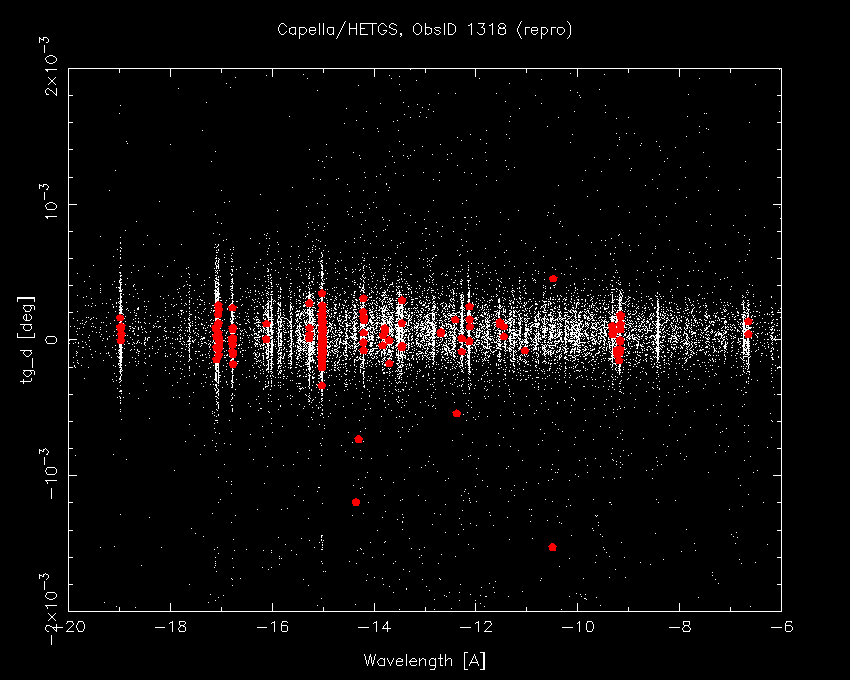
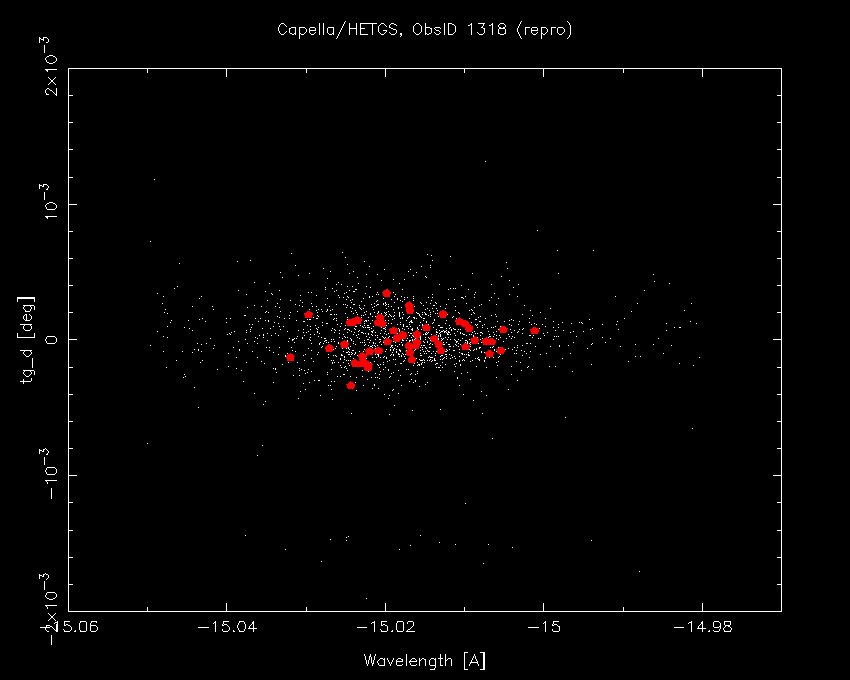
I used the reprocessed ObsID 1318 (Capella, HETG/ACIS-S) evt1 file and examined the number and location of events flagged as afterglow (STATUS bits 16-19), which would otherwise have been resolved as MEG +-1st order photons. Overall rejection from +-1st order MEG was 0.6%, but in strong lines, such as Fe XVII 15A, the fraction is 2.7 %.
Though this is a small fraction, it is systematic and non-uniform.
It affects only the brightest sources and the brightest lines, but many
of the grating spectra are of bright sources and are also variable.
We shouldn't introduce any known systematics, but let users apply acis_detect_afterglow
at their own discretion.
Figures:
MEG -1st order spectrum as a scatterplot in tg_d (cross dispersion angle) vs. tg_mlam (order * wavelength). Colored points are afterglow-flagged events.
MEG -1st order spectrum, w/ afterglows marked in color, Fe XVII 15A region:
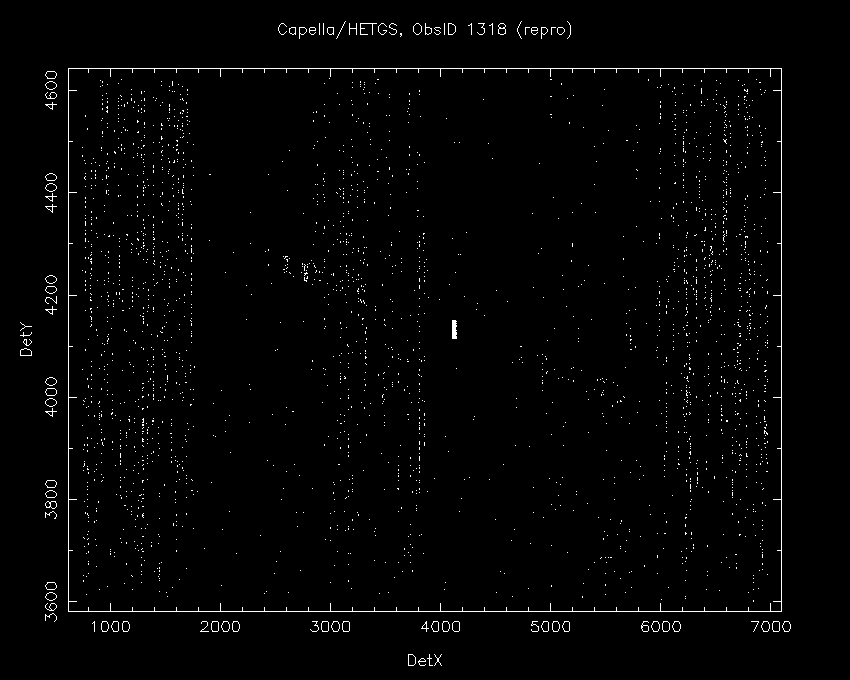
Full field, in detx,dety coordinates, showing only afterglow-tagged events. The zero-order is the rectangular spot near (4100,4100), and the MEG trace is apparent as are some strong lines (this is in detector coordinates, so spectral features are dithered). Vertical streaks are present on S0, S2, and S5.
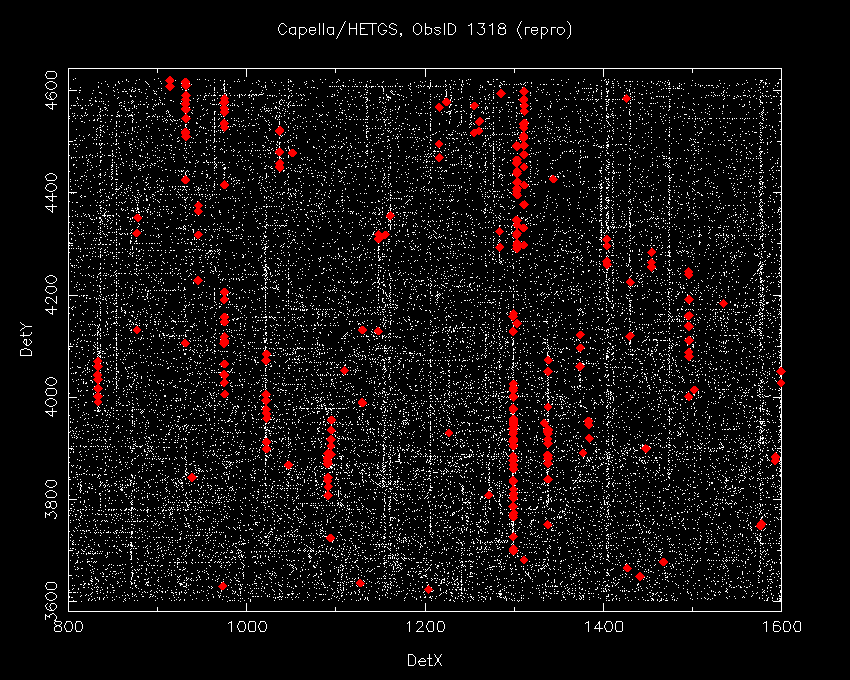
S0, only, in detx,y coordinates, showing all good Level 1 events (STATUS==0) and afterglow events in color. The afterglow follows the vertical streaks.
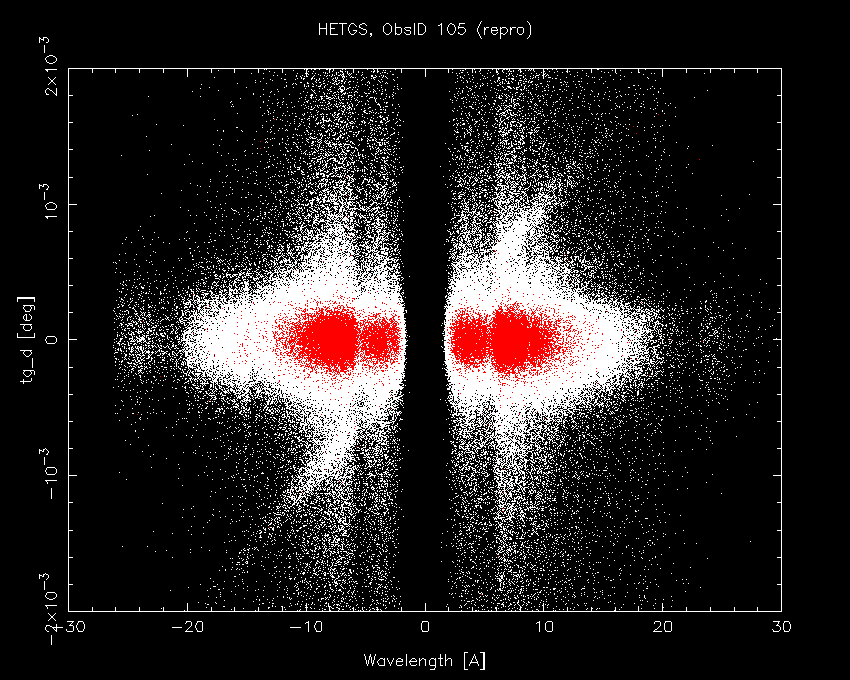
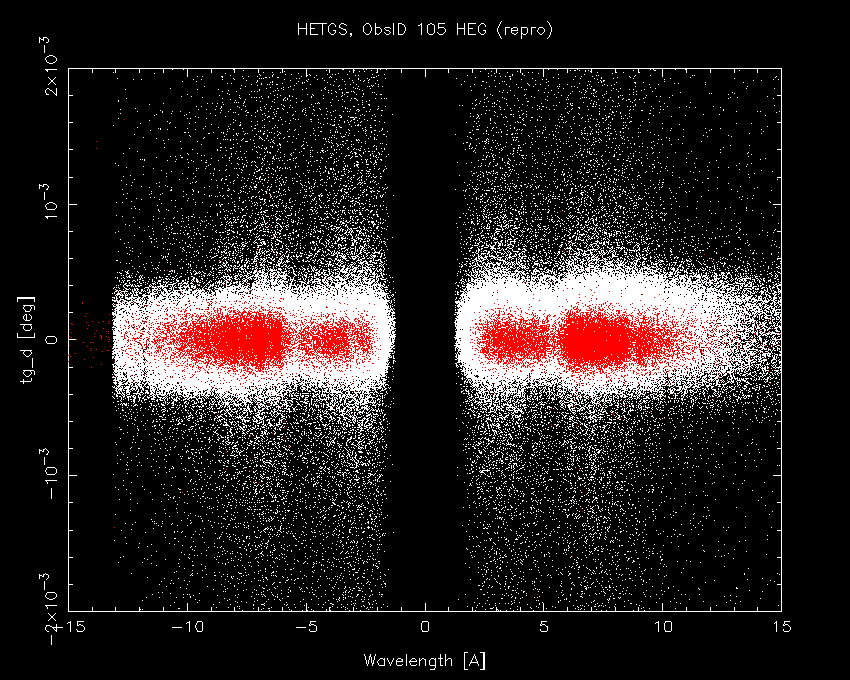
ObsID 105, a bright (heavily piled) continuum source has about 5% rejection:
MEG +-1st orders (Color marks afterglow-tagged events):
HEG +-1st orders (Color indicates afterglow-tagged events):
Figures were made with the following Slang/ISIS commands: Test_afterglow.sl